The six pieces, with a board for each · the special moves · checkmate
Chess is played on a board of 64 squares by two sides, White and Black, who take turns to move. Each side has a king, a queen, two rooks, two bishops, two knights and eight pawns. White moves first. Here is how every piece moves, with the squares it can reach marked on the board.
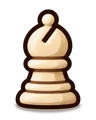
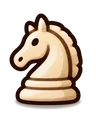
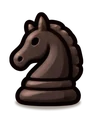
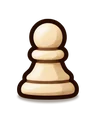
In Bible Chess the pieces are drawn as biblical figures: the queen is a Judge, the rook a Tower, the bishop a Prophet, the knight a Scout and the pawn a Shepherd. They move exactly like the chess pieces.
The king
87654321abcdefgh
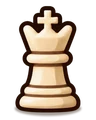
The king moves one square in any direction: forward, back, sideways or diagonally. It may never move onto a square where it would be in check. Protecting the king is the whole game: when it is attacked and cannot escape, that is checkmate.
The queen
87654321abcdefgh
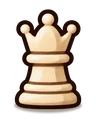
The queen moves any number of squares in a straight line, along a rank, a file or a diagonal. It is the strongest piece, worth about nine pawns. It cannot jump over other pieces.
The rook
87654321abcdefgh
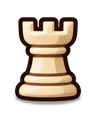
The rook moves any number of squares along a rank or a file, never diagonally. Rooks are worth about five pawns and are strongest on open files and on the seventh rank.
The bishop
87654321abcdefgh
The bishop moves any number of squares diagonally, so it stays on squares of one color for the whole game. Each side starts with a light-squared and a dark-squared bishop, each worth about three pawns.
The knight
87654321abcdefgh
The knight moves in an L: two squares in one direction and one to the side. It is the only piece that jumps over others, so its checks cannot be blocked. A knight always lands on a square of the other color.
The pawn
87654321abcdefgh
The pawn moves one square forward, or two on its first move, but captures one square diagonally forward. Pawns never move backward. A pawn that reaches the last rank is promoted to a queen, rook, bishop or knight.
Special moves
Castling. Once per game, the king moves two squares toward a rook, and the rook jumps to the square the king crossed. Neither may have moved before, the squares between them must be empty, and the king may not castle out of, through or into check.
En passant. If a pawn moves two squares and lands beside an enemy pawn, that pawn may capture it as if it had moved only one square, but only on the very next move.
Promotion. A pawn that reaches the last rank becomes a queen, rook, bishop or knight of the same color. See it in action in these pawn promotion puzzles.
Check, checkmate and stalemate
A king that is attacked is in check, and the player must get out of check at once: move the king, block the attack or capture the attacker. If none of these is possible, it is checkmate and the game is over. If a player has no legal move but is not in check, it is stalemate and the game is a draw.
 321abcdefgh
 321abcdefgh
 321abcdefgh
 321abcdefgh
 321abcdefgh
 2
 1abcdefgh